
Insights from the Amcham Finland discussion
Strengthening resilience against hybrid threats: Insights from the Amcham Finland discussion
How can organizations prepare for a threat landscape where cyber incidents, disinformation, AI-enabled influence operations, and attacks on critical infrastructure increasingly intersect?
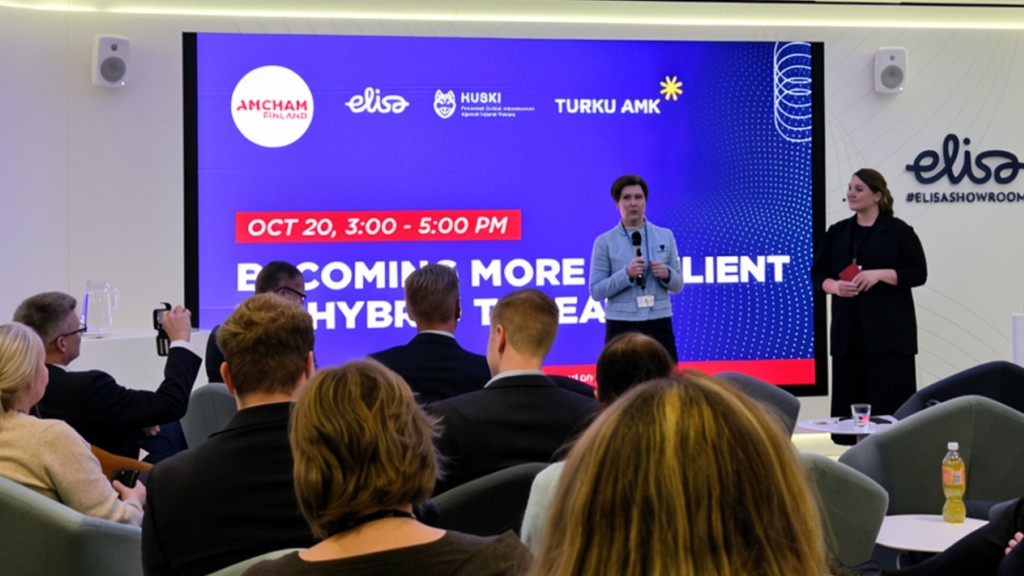
This was the question at the heart of a recent event hosted by Amcham Finland (American Chamber of Commerce) in Helsinki in October 2026, which brought together researchers, business leaders, and security experts to explore how organizations can become more resilient to hybrid threats.
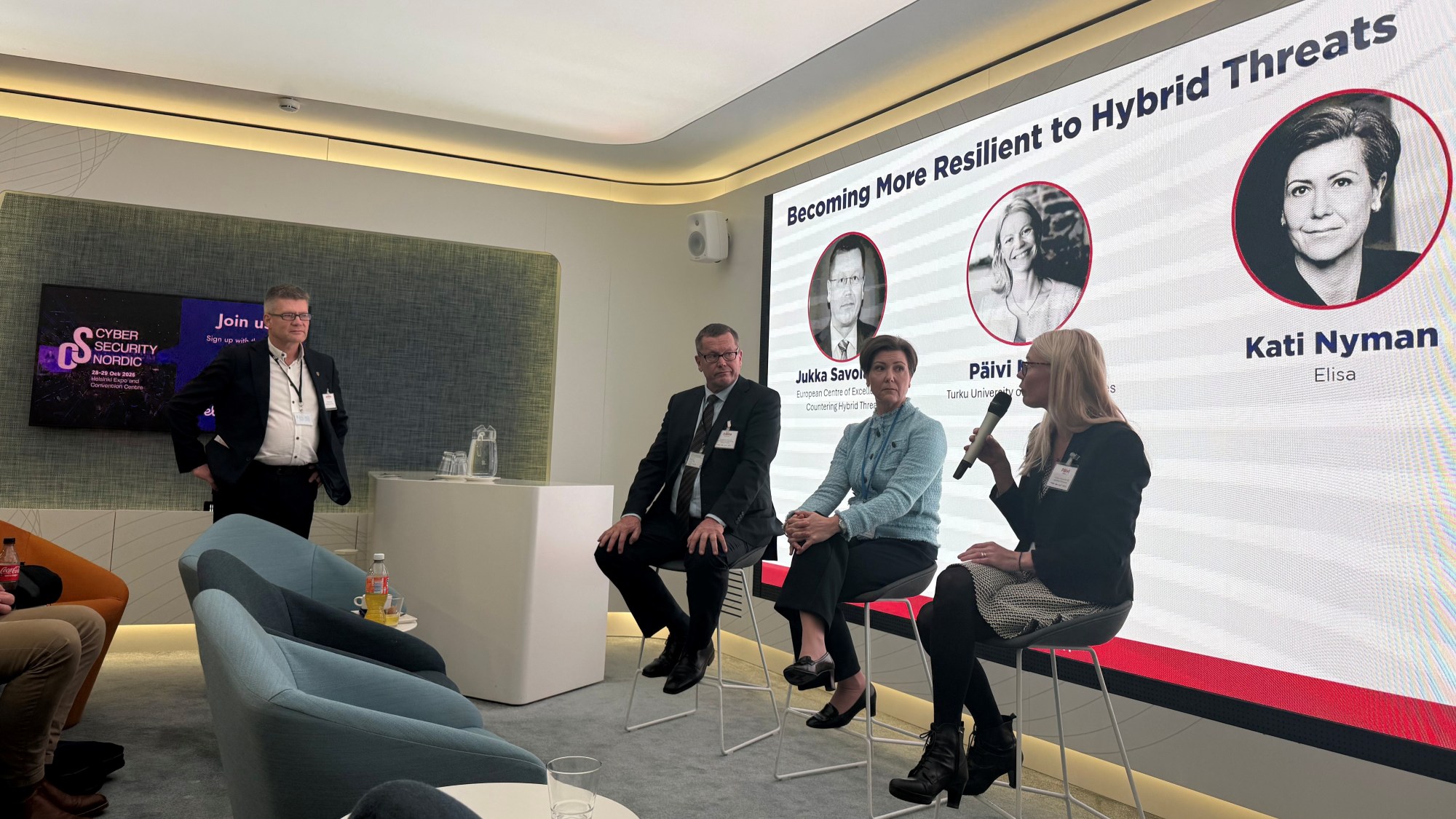
The sold-out event, titled Becoming More Resilient to Hybrid Threats, featured presentations from Jukka Savolainen, COI Director of Vulnerabilities and Resilience at the European Centre of Excellence for Countering Hybrid Threats (Hybrid CoE), the HUSKI project’s owner Päivi Mattila from Turku UAS, and Kati Nyman, EVP, Corporate Chief of Staff at Elisa. Together, they combined research, practical business experience, and critical infrastructure perspectives to discuss today’s evolving threat environment and how organizations can strengthen their preparedness.
 HUSKI research supports organizational preparedness
Representing the HUSKI project and Turku University of Applied Sciences, Päivi Mattila presented the work of the project. HUSKI is developing data-driven solutions to help identify, understand, and counter hybrid threats, supporting organizations responsible for critical infrastructure and essential services.
– A particular focus of the project is the development of a hybrid-threat situational awareness picture that will help critical infrastructure operators build a more comprehensive understanding of emerging risks and vulnerabilities, explained Mattila.
Resilience is not only a security issue but also a business, societal, and leadership challenge.
The discussion during the presentation highlighted an important reality: resilience is not built solely through technical solutions. Organizations must also develop the capabilities, partnerships, and situational awareness needed to recognize emerging threats and respond effectively when disruptions occur. This approach is also reflected in the HUSKI project, which also provides training, guidance material, and standard operating procedures that support organizations in preparing for and responding to hybrid threats.
From research to real-world resilience
One of the key themes of the afternoon was the growing complexity of hybrid threats. As highlighted by Amcham, many organizations are aware of the concept, but questions remain about what hybrid threats actually look like in practice, how companies should prepare for them, and how they should respond when incidents occur.
The presentations and subsequent discussion explored topics including:
- Attribution of hybrid threat campaigns and the challenges of identifying responsible actors
- The opportunities and risks associated with artificial intelligence
- Anticipating future threat developments
- Finland’s capabilities for responding to hybrid threats
- The role of legislation and regulation in supporting resilience
- Practical preparedness measures for organizations operating critical infrastructure
These conversations reinforced the need for close cooperation between research institutions, businesses, public authorities, and technology providers.
Building a more resilient society together
A particularly encouraging aspect of the event was the level of audience engagement. The thoughtful questions and lively discussion demonstrated that resilience is not only a security issue but also a business, societal, and leadership challenge.
The HUSKI project shares this collaborative approach. By bringing together research expertise and practical stakeholders, we aim to generate actionable knowledge that helps organizations strengthen their resilience against hybrid threats before disruptions occur. This is especially evident in the hybrid-threat situational awareness picture solution that HUSKI is developing in close cooperation with stakeholders and companies to ensure that our results address real-world needs and challenges.
We, in the HUSKI project, actively welcome companies interested in developing their own solutions to hybrid-threat detection and prevention and situational awareness to join us. Through participation in HUSKI’s research and innovation activities, organizations can contribute to the development of new solutions that enhance resilience across critical sectors.
As hybrid threats continue to evolve, forums such as this play a vital role in connecting research with practice and fostering the partnerships needed to protect critical infrastructure and essential services.
We would like to thank Amcham Finland for organizing this valuable discussion and providing a platform where experts from different sectors could exchange perspectives and ideas. The conversation made one thing clear: building resilience is an ongoing process, and it is a responsibility we all share.
Writer: Jessica Wright, senior advisor, Turku University of Applied Sciences